Your Manager Is Not Thinking About Your Career
Your manager has 47 problems. Your development is not one of them. If you want to grow, you need to own the process yourself.
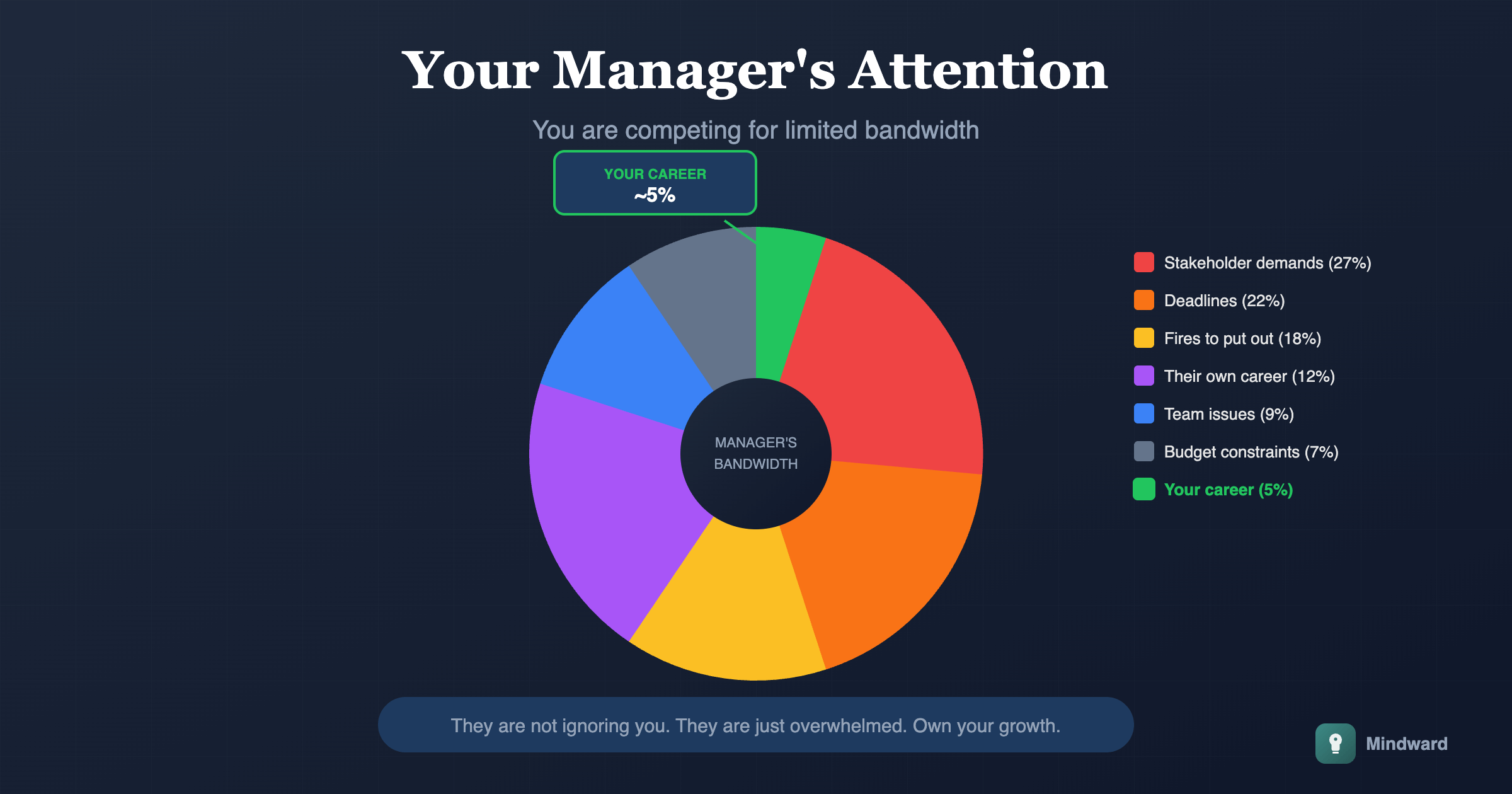
Your manager is not lying awake at night thinking about your career trajectory. They are not strategizing about your next promotion. They are not mapping out the skills you need to develop or the experiences you should seek.
This is not because they are bad managers or do not care about you. It is because they have their own problems. Deadlines. Stakeholders. Their own career. The ten other people on their team. Budget constraints. That difficult project that is behind schedule.
Your development is somewhere on their list. But it is not at the top. It never will be.
This is not a complaint. It is just reality. And once you accept it, you can stop waiting and start owning.
The Waiting Trap
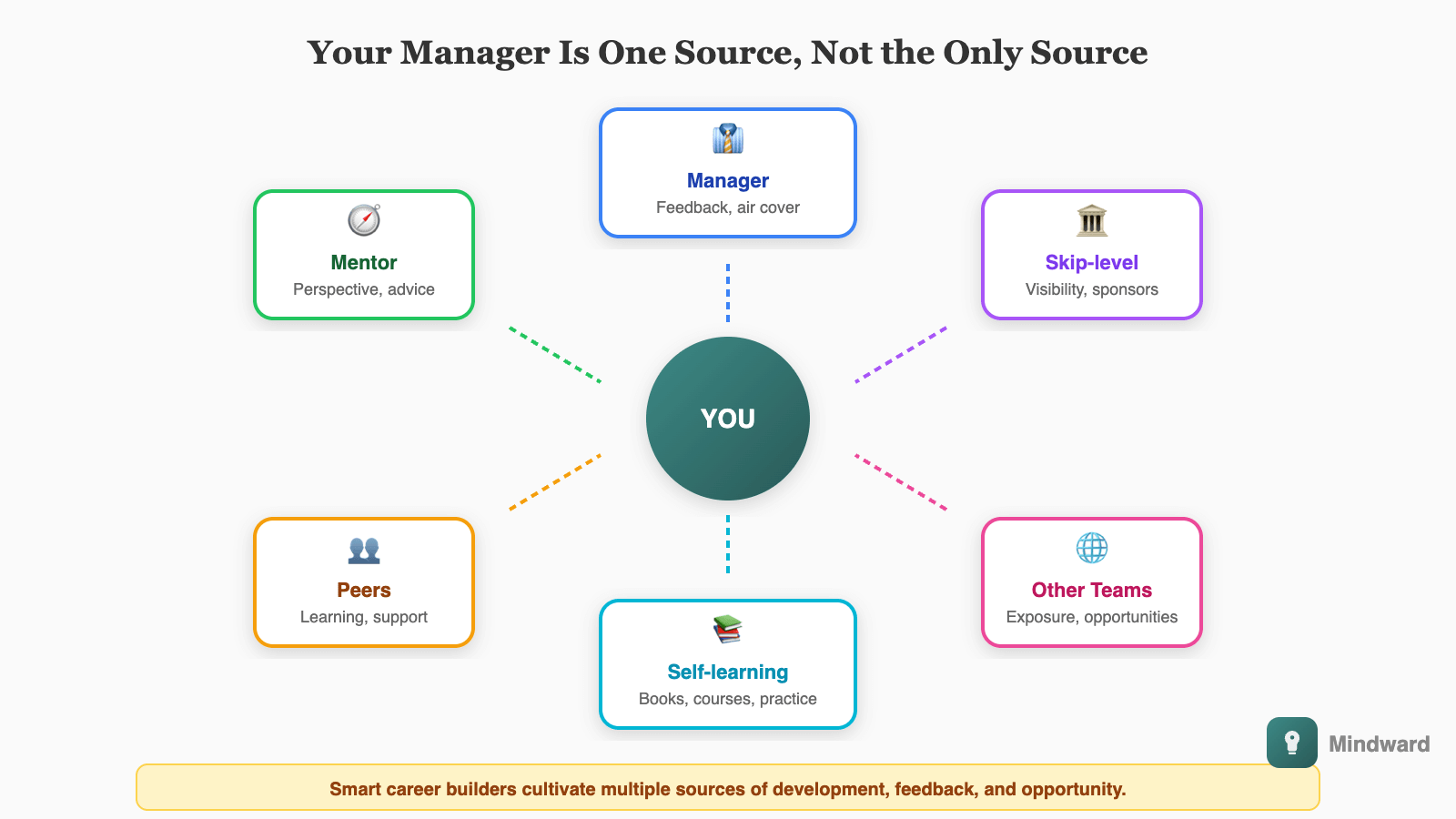
Most people approach career development passively. They assume someone is watching. That good performance will be noticed. That when they are ready for more, someone will tap them on the shoulder.
So they wait. They do good work and hope it speaks for itself. They mention in passing that they would like to grow, then wait for their manager to create a plan. They attend the training sessions that get assigned to them. They take on the projects that land on their desk.
Years pass. They watch others advance. They wonder what they are doing wrong.
What they are doing wrong is waiting. They outsourced responsibility for their career to someone who does not have the bandwidth to take it on.
Waiting for your manager to develop your career is like waiting for your gym to make you fit. The facility exists. But you have to show up and do the work.
Own the Process
If you want to grow, you need to be the one driving. Your manager can help, but you need to be in the driver's seat. This means doing the work that most people skip.
Know what you want. Most people cannot clearly articulate their career goals. They want to grow or advance or do something more interesting. That is not a goal. That is a vague wish. Get specific. What role do you want in two years? What skills do you need? What experiences are missing?
Identify the gaps. Compare where you are to where you want to be. What is the difference? Maybe you need management experience. Maybe you need technical depth. Maybe you need exposure to other parts of the business. Name the gaps specifically.
- Define your target role with specificity
- List the skills and experiences required for that role
- Honestly assess which ones you have and which you lack
- Identify two or three gaps to focus on this year
- Find opportunities to close those gaps in your current work
Make a plan. Do not wait for someone to create a development plan for you. Create your own. Write down what you want to learn, how you plan to learn it, and what opportunities you need. Then bring that plan to your manager. You are not asking them to figure it out. You are asking them to help you execute.
Use Your Manager Strategically
Your manager is not useless in this process. They are actually a powerful resource. But you need to use them strategically rather than hoping they will take initiative.
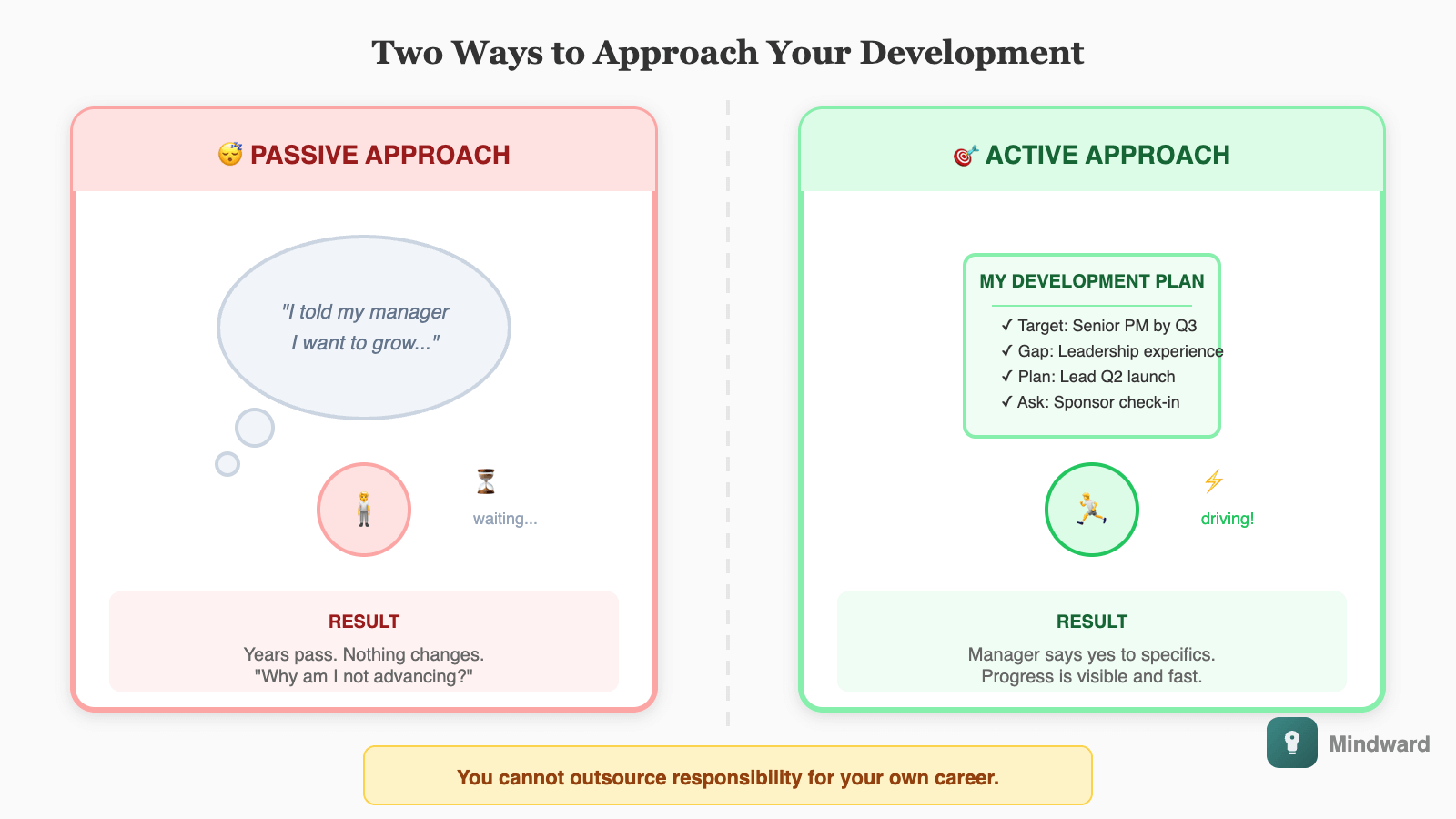
Come prepared to one-on-ones. Do not let these meetings become status updates. That is a waste of precious face time. Come with specific questions. What skills do you think I need to develop to reach the next level? Are there projects coming up that would give me exposure to X? Who should I be building relationships with?
Ask for specific help. I am trying to develop my presentation skills. Can you give me feedback after the next team meeting? I want to understand the business side better. Can you include me in the next budget discussion? Specific requests are easy to say yes to. Vague requests for development get vague responses.
Make their job easy. Your manager is more likely to help if helping is easy. Do the research yourself. Bring options instead of open questions. Instead of asking how can I grow, try I have identified three areas I want to develop this year. Here is my plan for each. What am I missing?
Find Other Sources
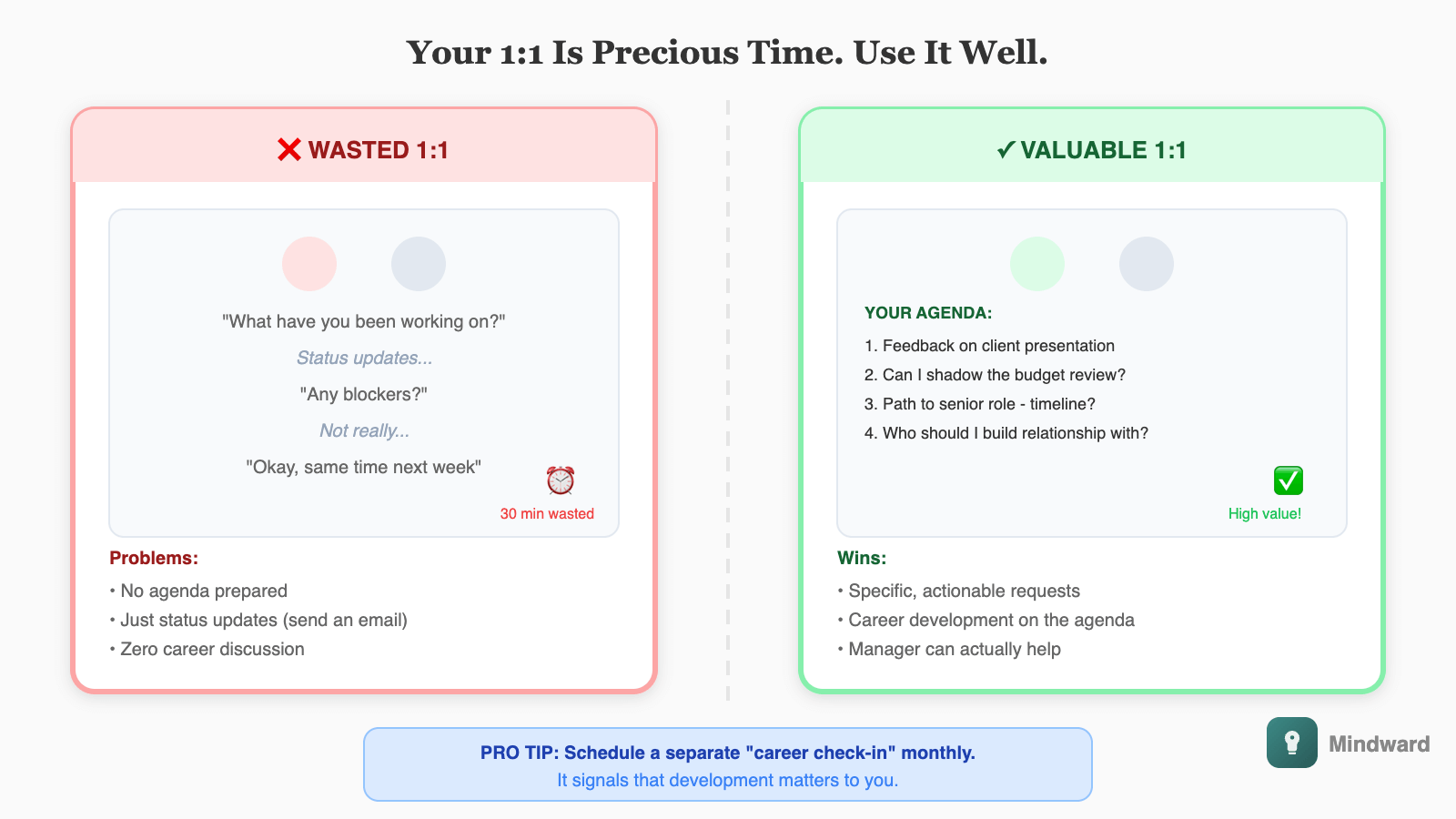
Your manager is one resource, not the only resource. Smart career builders cultivate multiple sources of development and feedback.
Find a mentor outside your direct reporting line. Someone who has been where you want to go. Someone who can give you perspective your manager cannot. This does not have to be formal. A coffee every month with someone you respect can be transformative.
Build relationships with skip-level leaders. Your manager's manager and peers have visibility into opportunities your manager does not. They make decisions about promotions and high-profile projects. Being known to them matters.
Learn from peers. The people at your level who are doing interesting work have figured something out. Ask them how they got that project. Ask what they are learning. Peer learning is underrated.
Create Your Own Opportunities
Do not wait for opportunities to be handed to you. Create them. Volunteer for the project that scares you. Propose the initiative no one else is championing. Raise your hand for the presentation everyone else avoids.
The best development happens through stretch assignments, not training courses. And stretch assignments rarely fall into your lap. You have to seek them out, sometimes create them yourself.
When you see a gap in the team or a problem no one is solving, that is an opportunity. I noticed we do not have a good process for X. I would like to take that on and build something. You just created a development opportunity out of nothing.
The people who grow fastest are not the ones given the best opportunities. They are the ones who create and capture opportunities others overlook.
Track Your Own Progress
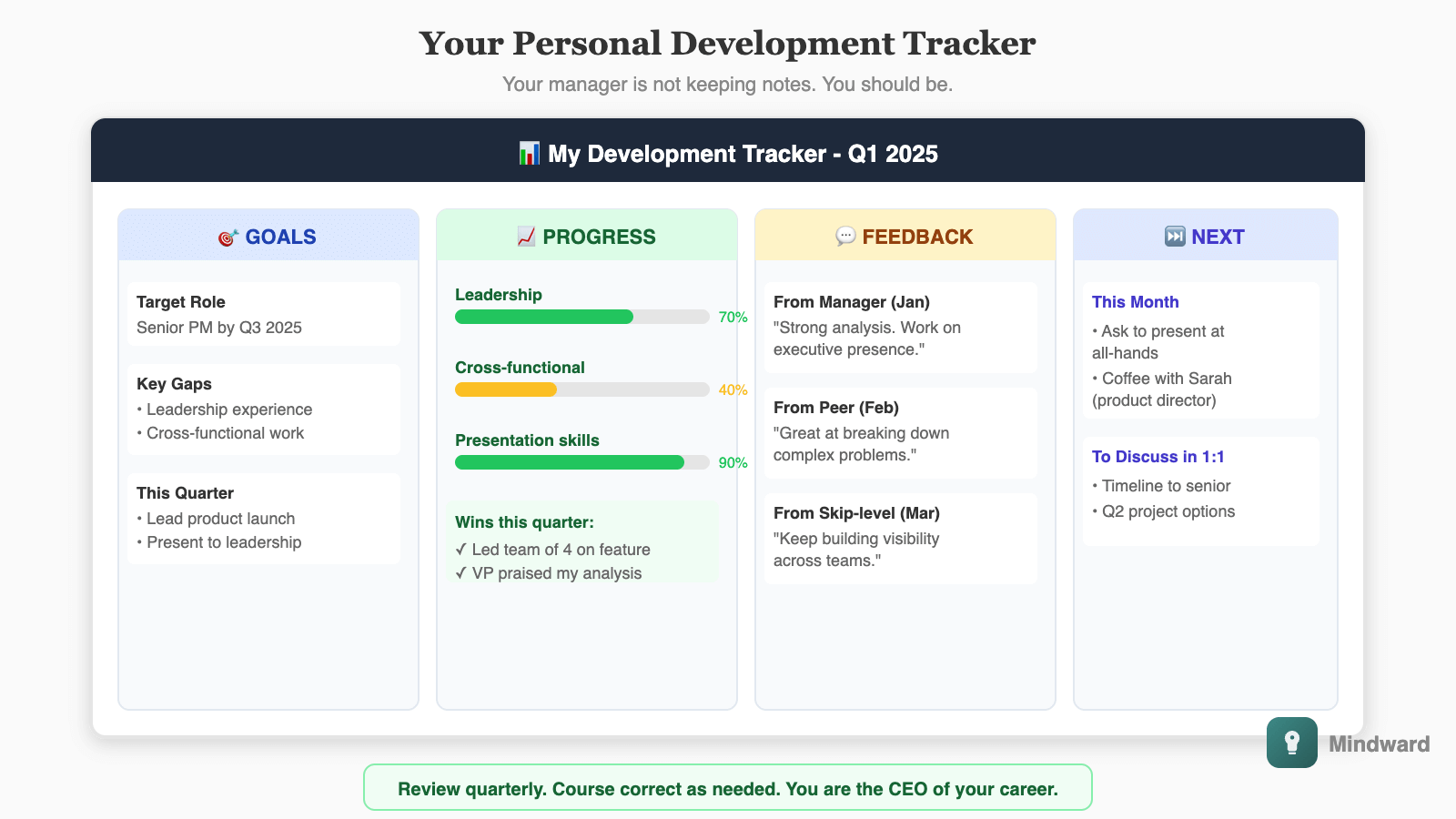
Your manager is not keeping detailed notes on your development. If you want to know whether you are progressing, you need to track it yourself.
Keep a record of skills developed, projects completed, feedback received, impact delivered. When review time comes, you will have evidence. When you want to make a case for promotion, you will have specifics. When you feel stuck, you can look back and see how far you have come.
Check in with yourself quarterly. Am I making progress on the gaps I identified? Am I getting the experiences I need? Is my plan still the right plan? Course correct as needed.
The Mindset Shift
This is ultimately about mindset. Stop thinking of your career as something that happens to you. Start thinking of it as something you build.
Your manager is a resource, not a parent. Your company provides a platform, not a path. Your development is your project, not someone else's responsibility.
This might sound like more work. It is. But it is also more control. You are not at the mercy of whether your manager is thoughtful about development, whether your company has good programs, whether you get lucky with assignments. You are the one making it happen.
Your manager has 47 problems. Make sure your career is not one of them. Own it yourself, and you will go further than waiting ever would have taken you.


Comments
How did you like this article?
No comments yet. Be the first to share your thoughts!