Saying Yes to Everything Is Saying No to What Matters
The most valuable people are not the ones who say yes to everything. They are the ones who say yes to the right things. Learning to say no is a career skill, not a career risk.
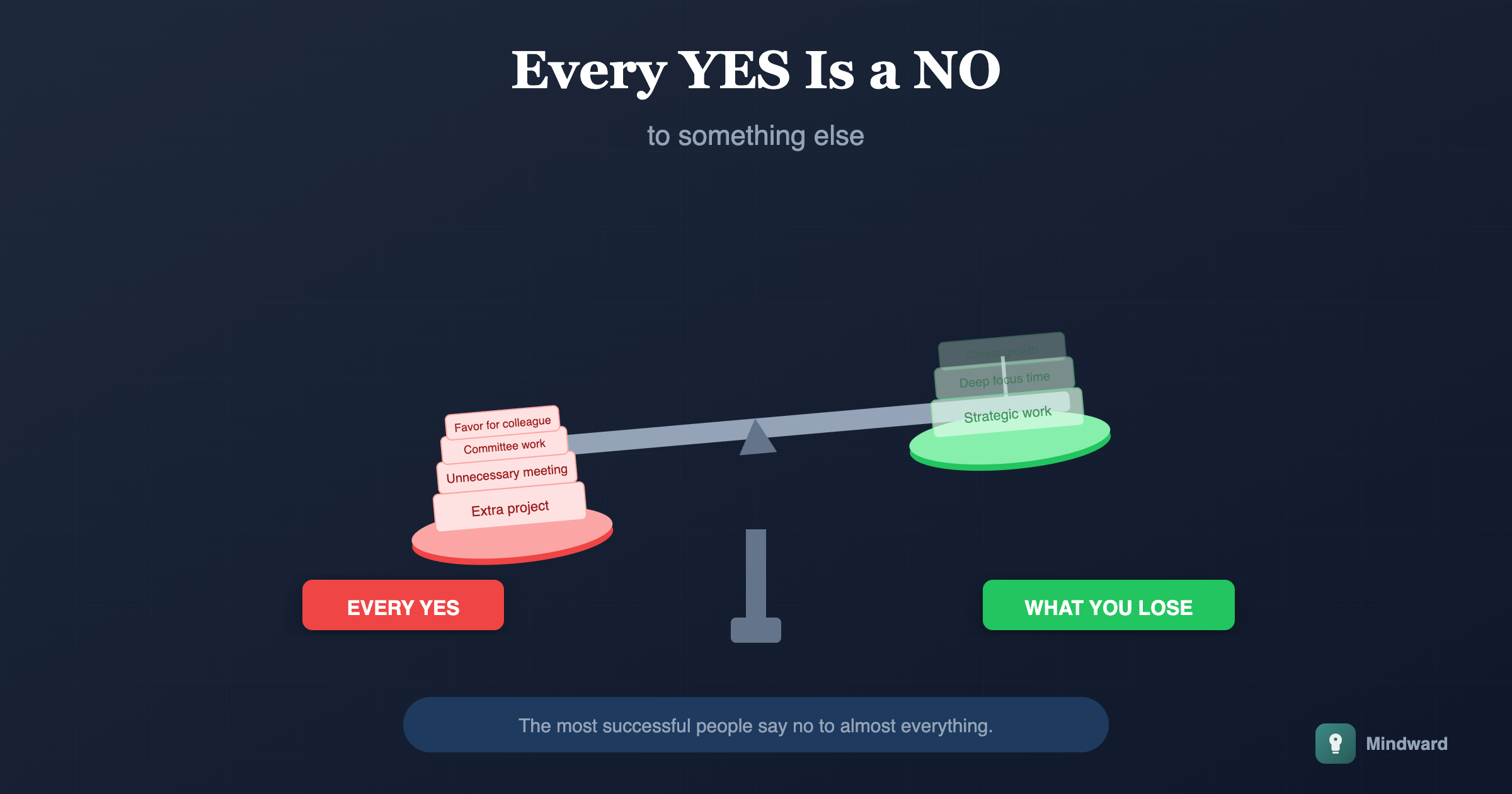
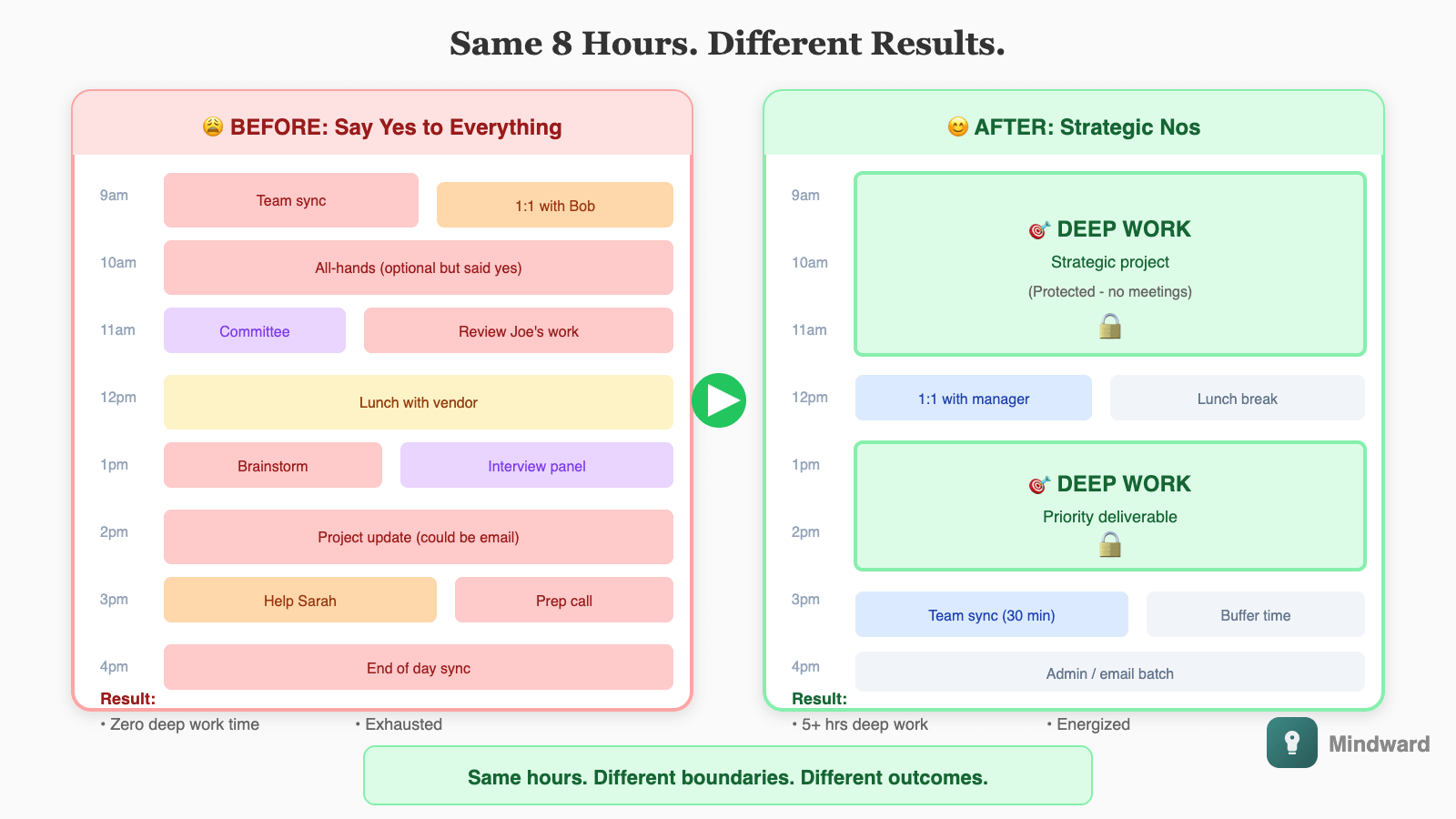
You said yes to the extra project. Yes to the committee. Yes to covering for a colleague. Yes to the meeting that could have been an email. Yes to the task outside your job description because no one else would do it.
Now you are stretched thin. The work that actually matters is getting squeezed. You are busy all the time but advancing nowhere. You have become reliable for the wrong things.
Here is the uncomfortable math: every yes is a no to something else. When you say yes to the low-value request, you are saying no to the high-value work you could have done instead. When you say yes to everyone else's priorities, you are saying no to your own.
The most successful people are not the ones who say yes to everything. They are the ones who have learned to say no strategically.
Why We Say Yes When We Should Not
Saying yes feels safe. It feels helpful. It feels like what good employees do. We are trained from early in our careers to be agreeable, to be team players, to not rock the boat.
We fear the consequences of no. What if they think I am not committed? What if I miss an opportunity? What if they stop asking me for things? The imagined downside of declining feels larger than it actually is.
We also underestimate the cost of yes. In the moment, each individual request seems manageable. But yeses accumulate. They compound. Before you know it, your calendar is full of other people's priorities and your own work happens in the margins.
The person who says yes to everything becomes known as the person who can be given anything. That is not a reputation that leads to promotion.
The Hidden Cost of Yes
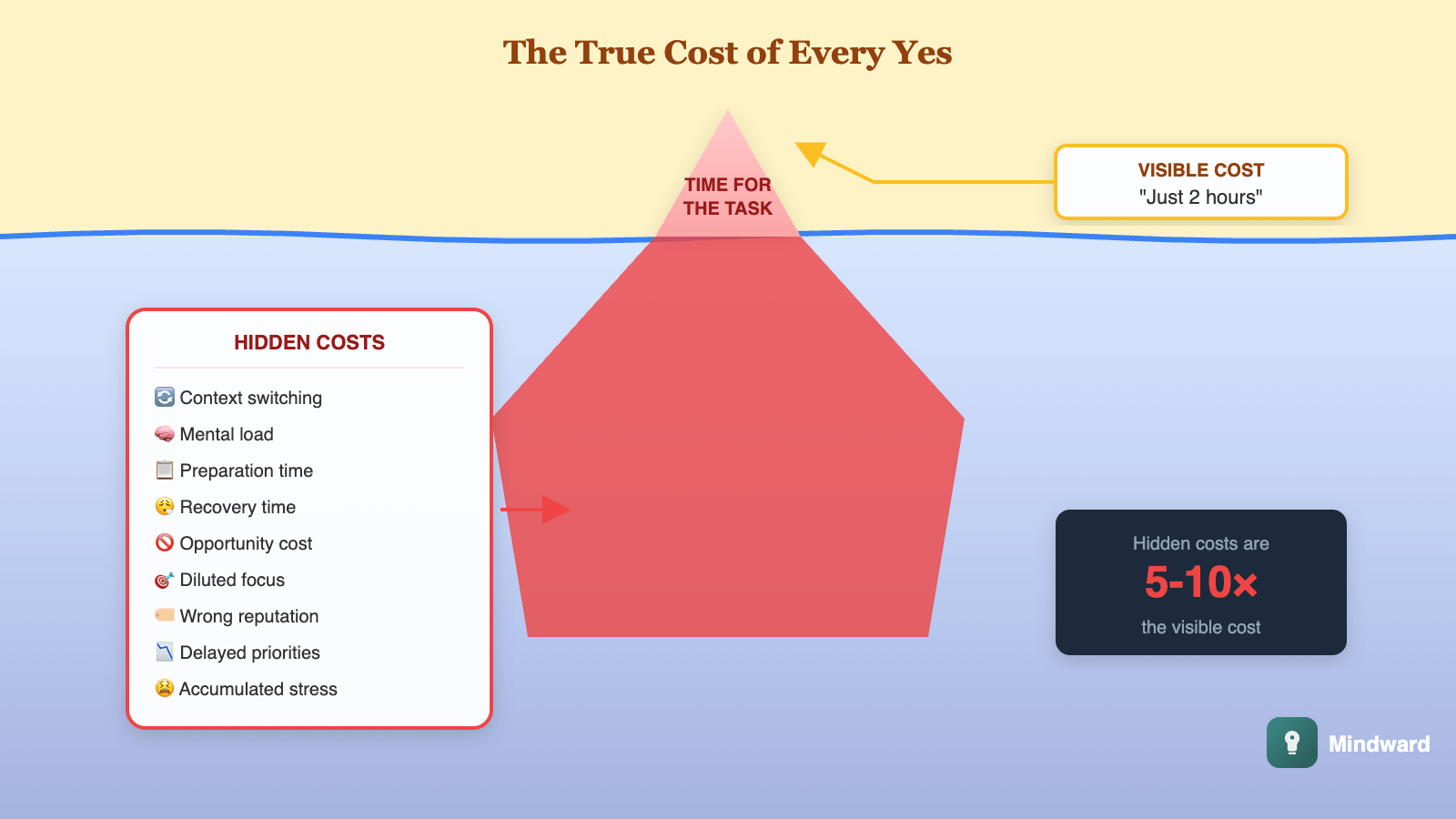
Every commitment has a cost beyond the time it takes. There is the context switching. The mental load of tracking another obligation. The recovery time after the task. The opportunity cost of what you did not do.
When you say yes to a meeting, you are not just losing that hour. You are losing the focused work time before and after. You are adding another thing to remember and prepare for. You are fragmenting your day further.
When you say yes to a project outside your core responsibilities, you are not just adding work. You are diluting your focus. You are potentially becoming known for the wrong things. You are building expertise in areas that may not matter for where you want to go.
Strategic No
Saying no is not about being unhelpful or difficult. It is about being intentional. The goal is to say yes to the things that matter most and no to the things that do not.
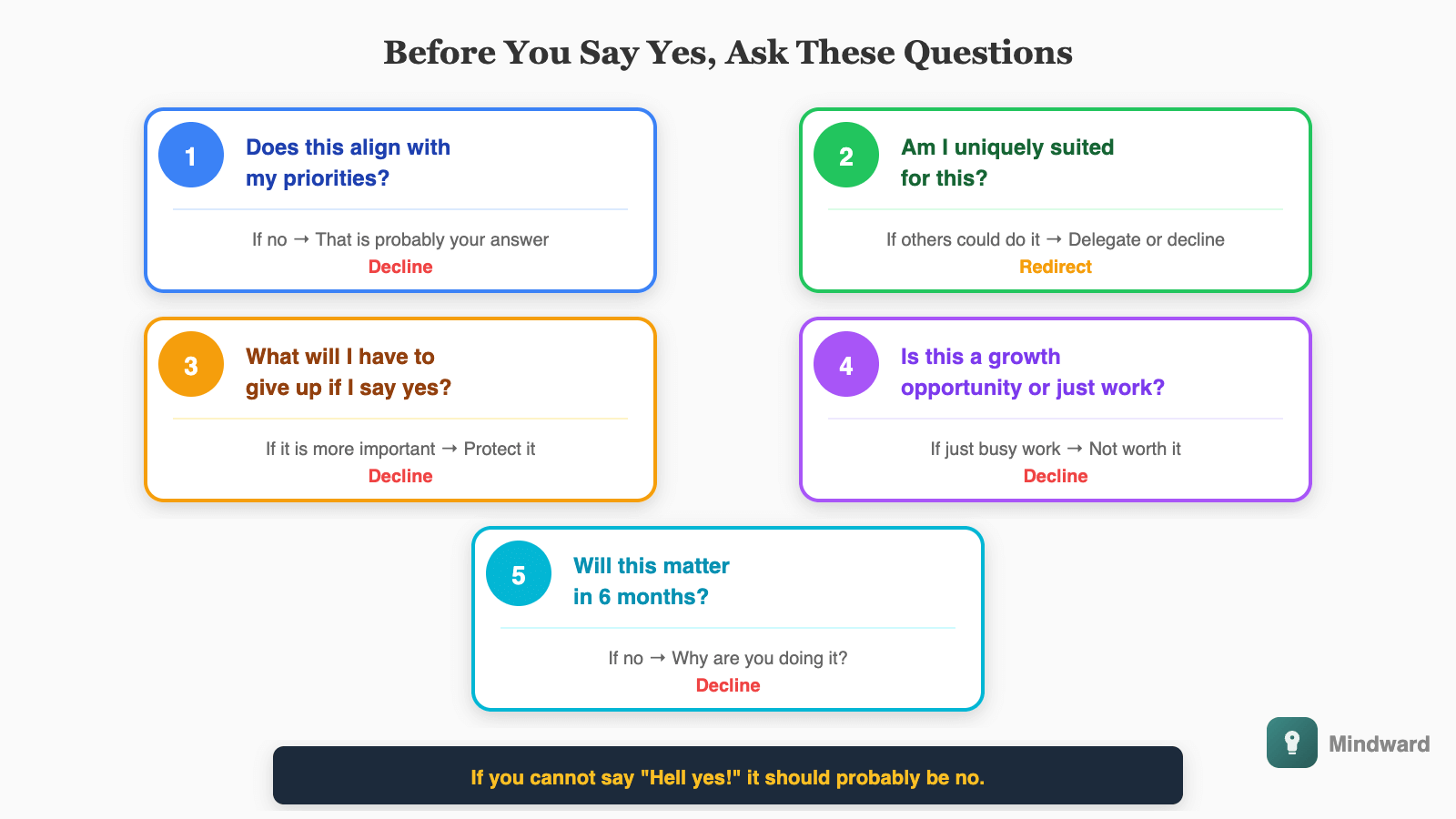
Before responding to any request, ask yourself three questions. Does this align with my priorities and goals? Am I the right person for this, or could someone else do it as well or better? What will I have to say no to if I say yes to this?
If the answer to the first question is no, that is usually your answer. If someone else could do it just as well, consider whether saying yes is the best use of your specific skills and time. If saying yes means saying no to something more important, you have your answer.
- Does this align with my goals and priorities?
- Am I uniquely suited for this, or could others do it?
- What will I have to give up if I say yes?
- Is this a growth opportunity or just more work?
- Will this matter in six months?
How to Say No Without Burning Bridges
The fear of saying no is often about how to say it. Done poorly, no can damage relationships. Done well, it actually builds respect.
Be direct but kind. Do not over-explain or apologize excessively. A simple, clear decline is more professional than a rambling justification. I am not able to take this on right now is a complete sentence.
Offer an alternative when possible. I cannot attend that meeting, but I can review the notes and send my input afterward. I am not the right person for this project, but Sarah has the expertise you need. You are still being helpful without taking on the commitment.
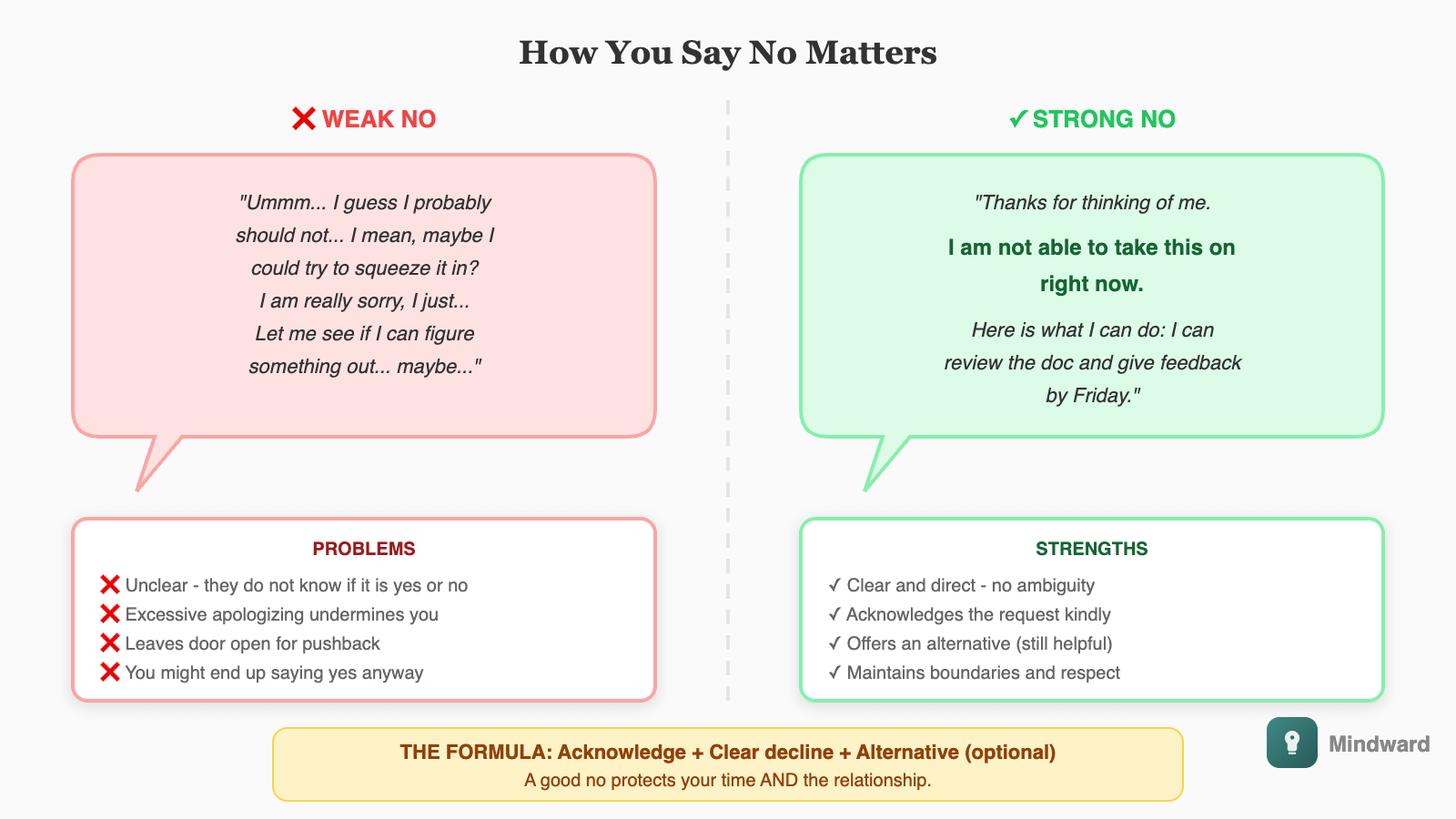
Acknowledge the request before declining. I appreciate you thinking of me for this. I understand this is important. This shows you are not dismissing them, you are just declining the specific request.
Buy yourself time if needed. Let me check my commitments and get back to you. This prevents an impulsive yes and gives you space to evaluate properly. Most requests are not as urgent as they feel in the moment.
Protect Your Deep Work
The most important work usually requires focus. Strategy. Complex problem-solving. Creative thinking. Learning new skills. This work cannot happen in thirty-minute fragments between meetings.
Every time you say yes to something that fragments your time, you are saying no to the deep work that actually drives your career forward. The irony is that we often sacrifice the important for the urgent, then wonder why we are not advancing.
Block time for your priorities before others fill your calendar. Treat those blocks as non-negotiable. When someone asks for that time, the answer is I have a commitment. You do. A commitment to your own work.
The work that gets you promoted is rarely the work that fills your calendar through other people's requests.
What Happens When You Start Saying No
People adjust. The first few times you decline, it might feel uncomfortable. But people quickly recalibrate their expectations. They learn that your time is not infinitely available, which actually increases respect for your time.
Your yeses become more valuable. When you are known as someone who says yes to everything, your yes means nothing. When you are selective, your yes carries weight. People know that when you commit, you are fully committed.
You have time for what matters. The space created by strategic nos fills with the work that actually moves you forward. You can focus. You can think. You can do your best work instead of just more work.
Start Small
If you have been a chronic yes-sayer, you do not need to transform overnight. Start with low-stakes nos. Decline the meeting that does not need you. Push back on the deadline that is artificial. Suggest an alternative to the request that does not fit.
Notice what happens. Usually, nothing bad. The world does not end. People find other solutions. Your fears about the consequences of no are almost always exaggerated.
Build the muscle gradually. Each no gets easier. Each boundary you set makes the next one more natural. Over time, being selective becomes your default rather than your exception.
Your career is not built by saying yes to everything that comes your way. It is built by saying yes to the right things and having the courage to say no to the rest. Start practicing today.


Comments
How did you like this article?
No comments yet. Be the first to share your thoughts!