Nobody Is Going to Offer You What You Do Not Ask For
The raise you deserve, the project you want, the flexibility you need - none of it comes to those who wait. Asking is uncomfortable. Not asking is expensive.
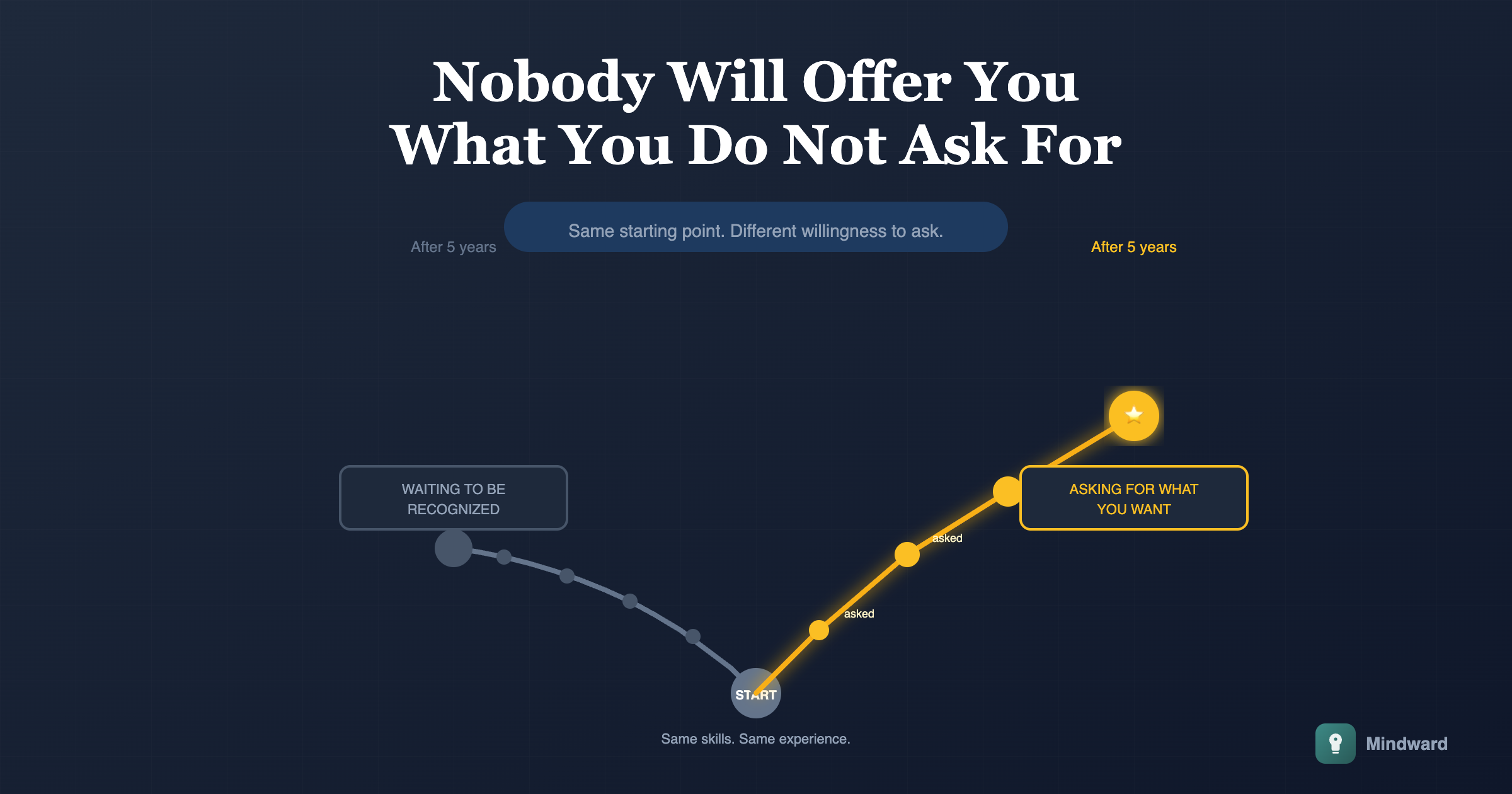
There is a raise you probably deserve that you have not asked for. A project you want that you have not requested. A schedule change that would improve your life that you have not proposed. Opportunities you are qualified for that you have not pursued.
You are waiting. For someone to notice. For the right moment. For permission that will never come.
Here is the uncomfortable truth: the people who get what they want at work are not necessarily more talented or more deserving. They are simply more willing to ask. They understand something that many high-performers miss - nobody is going to offer you what you do not ask for.
The Cost of Not Asking
Every time you do not ask, you leave value on the table. Not just once, but compounding over time.
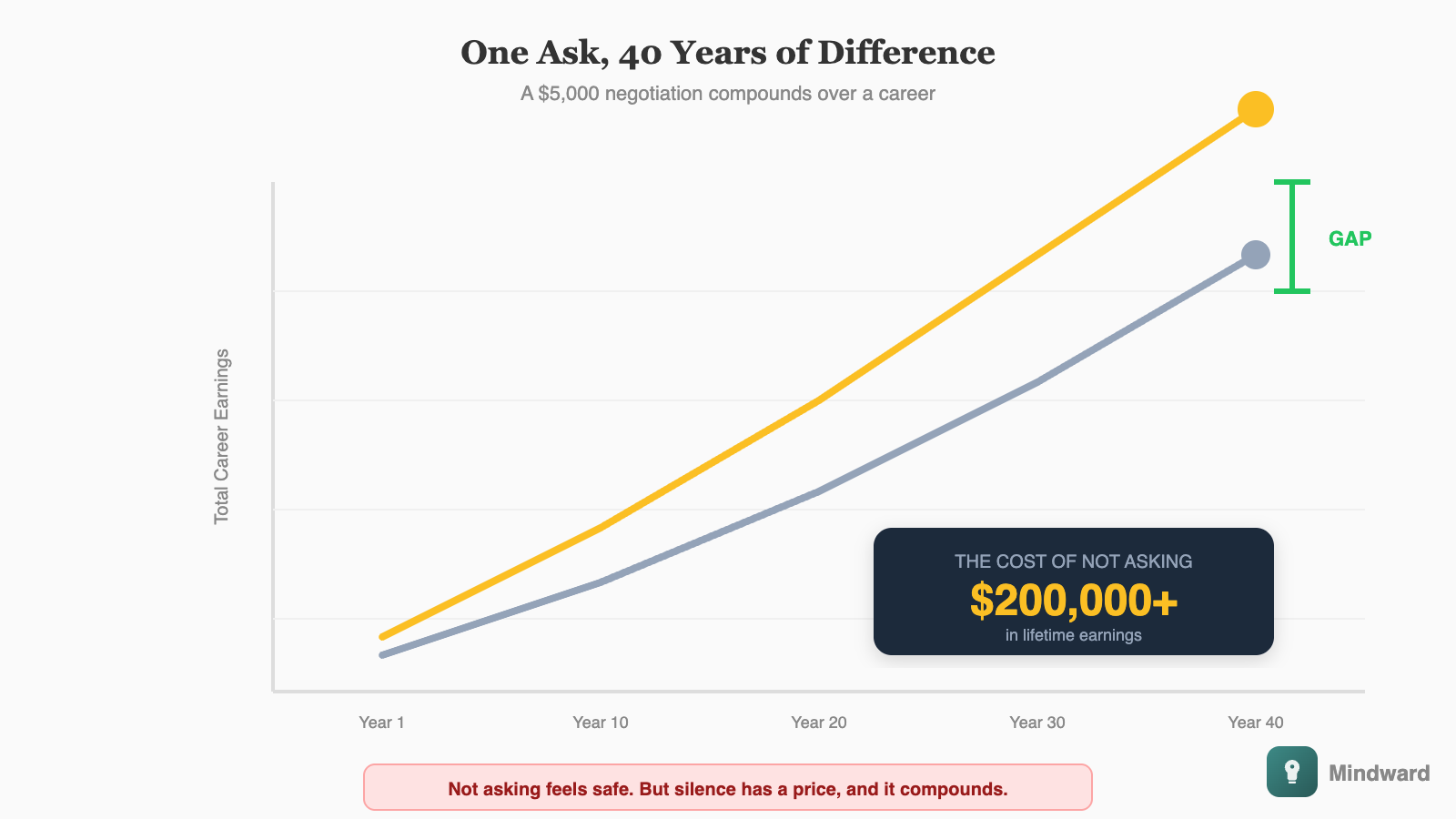
Consider salary. The person who negotiates their starting offer by just 5,000 dollars does not just gain that amount once. Over a 40-year career, with raises calculated as percentages of base salary, that single ask compounds to hundreds of thousands of dollars. The person who never asked starts behind and stays behind, even if they perform identically.
The same compounding applies to opportunities. The person who asks to lead a project gets experience that qualifies them for the next opportunity. The person who waits to be chosen watches from the sidelines, wondering why they keep getting passed over.
Not asking feels safe. But silence has a cost, and that cost compounds.
Why We Do Not Ask
If asking is so valuable, why do most people avoid it? Because it triggers deep discomfort.
We fear rejection. What if they say no? What if they think less of us for asking? The possibility of rejection feels like a threat, so we avoid it entirely. We choose the certainty of not having over the uncertainty of being told no.
We fear seeming greedy or pushy. Good people do not ask for things, we tell ourselves. We should be grateful for what we have. Wanting more feels like a character flaw.
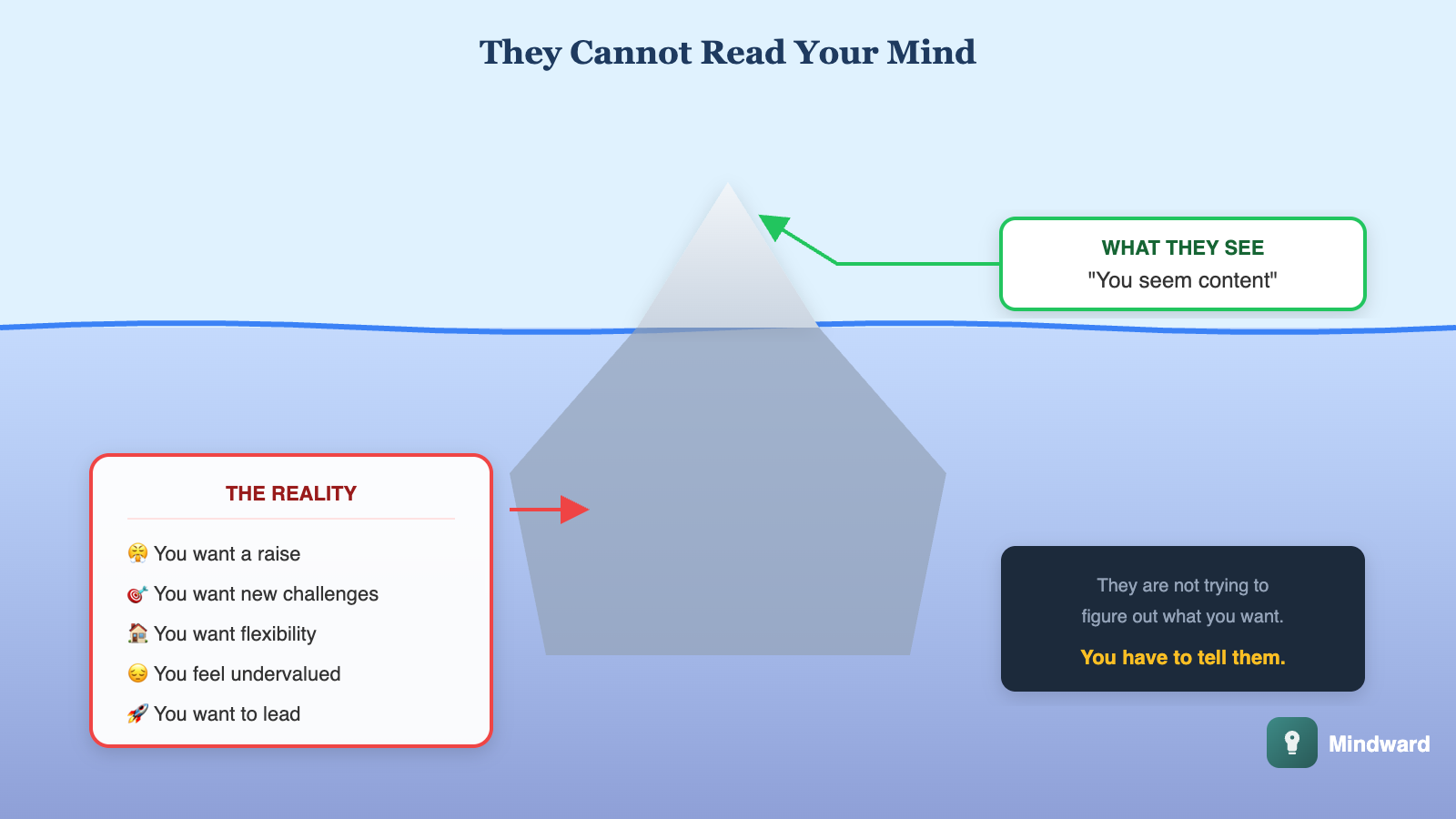
We assume they would offer if we deserved it. If I were really doing a good job, they would give me a raise without me having to ask. If I were qualified for that project, they would choose me. This belief is comforting but false. People are busy. They are not thinking about what you want. They are thinking about their own problems.
Reframe What Asking Means
Asking is not demanding. It is not entitlement. It is providing information.
When you ask for a raise, you are telling your manager: I believe my contribution exceeds my current compensation. Here is why. When you ask for a project, you are saying: I am interested and capable. Consider me. When you ask for flexibility, you are proposing: here is an arrangement that works for both of us.
You are not forcing anyone to do anything. You are starting a conversation. The other person still gets to decide. But now they have information they did not have before.
Most managers are not sitting around thinking about how to make your life better. They are overwhelmed with their own responsibilities. When you ask for something, you are doing them a favor - you are making your needs known so they can actually address them.
How to Ask Well
Asking effectively is a skill. It can be learned. Here is what works.
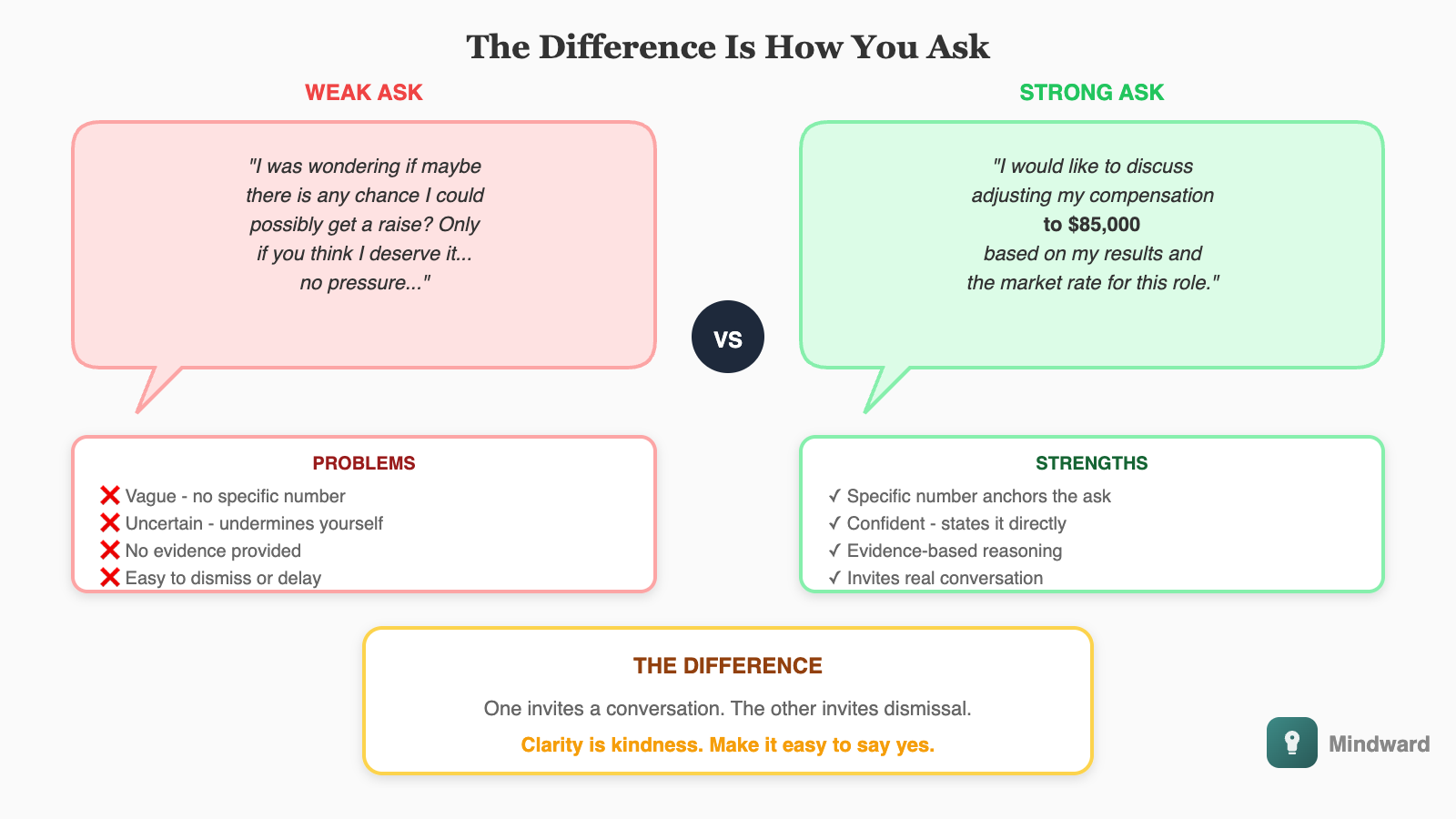
Be specific. Do not say you want more money. Say you are requesting a salary adjustment to a specific number, based on your contributions and market data. Do not say you want more responsibility. Say you want to lead the upcoming product launch because of your relevant experience. Vague asks get vague responses.
- Know exactly what you want before you ask
- Anchor to evidence (your contributions, market rates, specific results)
- Make it easy to say yes (be clear, be reasonable, be professional)
- Ask in the right context (scheduled conversation, not hallway ambush)
- Be prepared to hear no without taking it personally
Frame it around value. The ask should not be about what you want, but about why it makes sense. You are not asking for a raise because you want more money. You are asking because your responsibilities have grown, your results have exceeded expectations, and your compensation should reflect that.
Choose your moment. Do not ask for a raise when the company just announced layoffs. Do not request a new project when your current one is on fire. Context matters. Look for moments when your value is visible and the other person is in a position to say yes.
What If They Say No
They might say no. This is not a catastrophe. It is information.
A no today is not a no forever. It often means not right now or not in this form. The right response is to ask what would need to change. What would it take for me to get to that salary? What would I need to demonstrate to lead that project? Now you have a roadmap instead of a rejection.
Sometimes the no reveals something important. If you ask for a raise based on strong performance and get told the budget does not allow it year after year, that is useful data. It tells you something about your future at this company. Better to know than to wonder.
A no is disappointing for a moment. Never asking is disappointing for a career.
Start Small
If asking feels paralyzing, start with lower-stakes requests. Ask for feedback. Ask to attend a conference. Ask for a meeting with someone you want to learn from. Each small ask builds the muscle.
You will discover something important: most asks do not result in rejection. They result in yes, or in a conversation that moves things forward. The fear was worse than the reality.
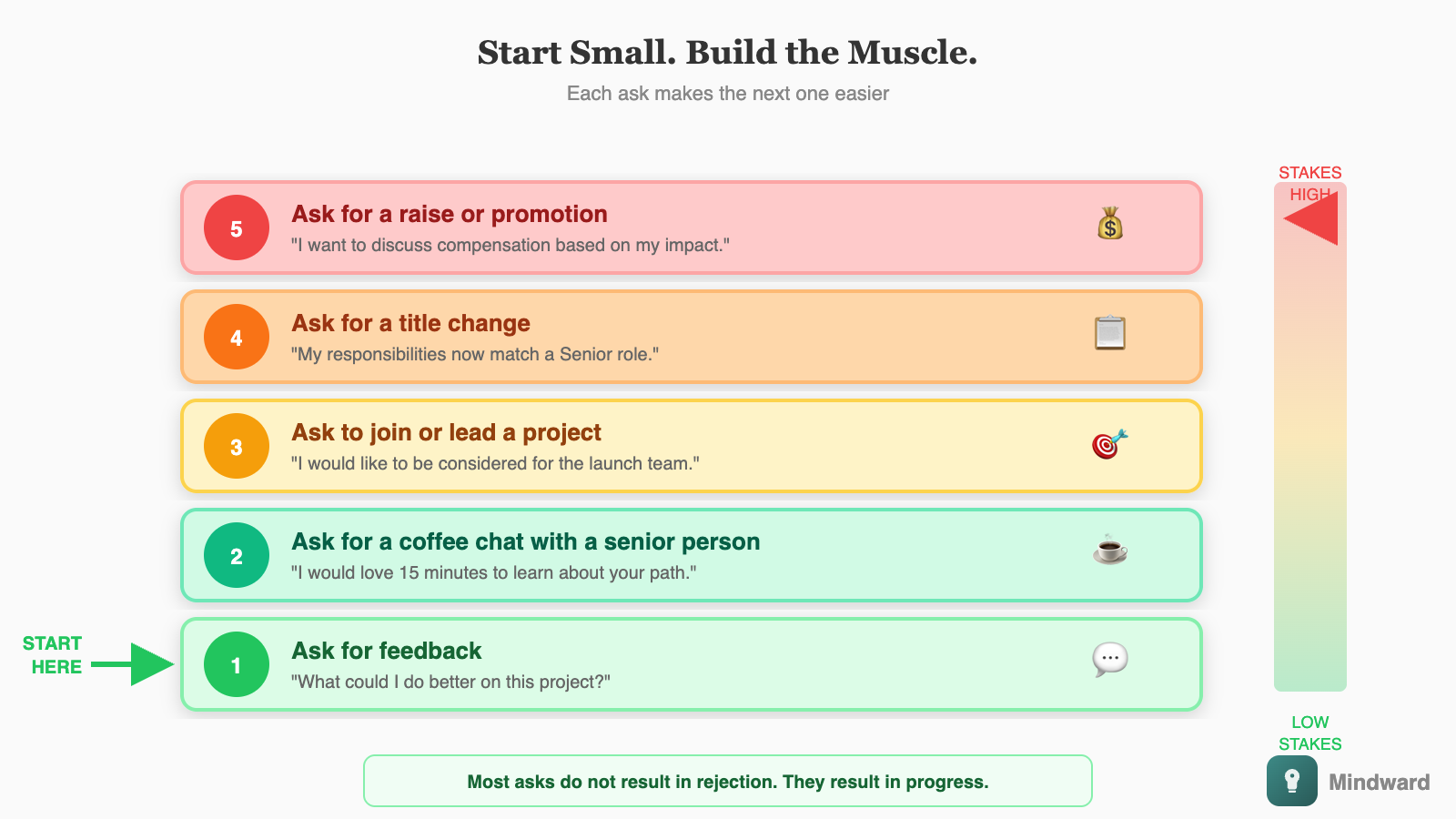
With each ask, the next one becomes easier. You build evidence that asking leads to outcomes - sometimes yes, sometimes no, but always more than silence. The discomfort never disappears completely, but it becomes manageable. It becomes just part of the process.
The Asking Mindset
The people who advance are not the ones who wait to be discovered. They are the ones who understand that careers are built through countless small asks, accumulated over time.
They ask for the meeting. They ask for the project. They ask for the introduction. They ask for the feedback. They ask for the raise. Each ask is a small investment in their own future, a refusal to leave their career in someone else's hands.
This is not about being aggressive or entitled. It is about being an active participant in your own professional life. It is about providing information that helps people help you. It is about understanding that silence is not rewarded, and waiting is not a strategy.
The opportunity you want, the compensation you deserve, the career you are building - none of it comes to those who wait quietly. You have to ask. Start today.


Comments
How did you like this article?
No comments yet. Be the first to share your thoughts!