The Pause Before You Respond Is Doing More Than You Think
Silence isn't empty. It's where understanding deepens, reactions soften, and better responses are born.

Someone finishes speaking. There's a brief silence. And in that silence, most people feel pressure—an urge to fill the space, to respond, to prove they were listening by immediately having something to say.
But that pause you're rushing past? It's not dead air. It's one of the most powerful tools in communication, and almost no one uses it.
The space between their words and yours isn't empty. It's where the real work happens.
Why We Rush to Respond
The impulse to respond immediately is deeply wired. Silence feels uncomfortable. It can feel like failure—like you don't know what to say, or worse, like you weren't paying attention.
There's also ego involved. Quick responses signal intelligence, engagement, competence. We want to show we're tracking, that we have thoughts worth sharing, that we belong in the conversation.
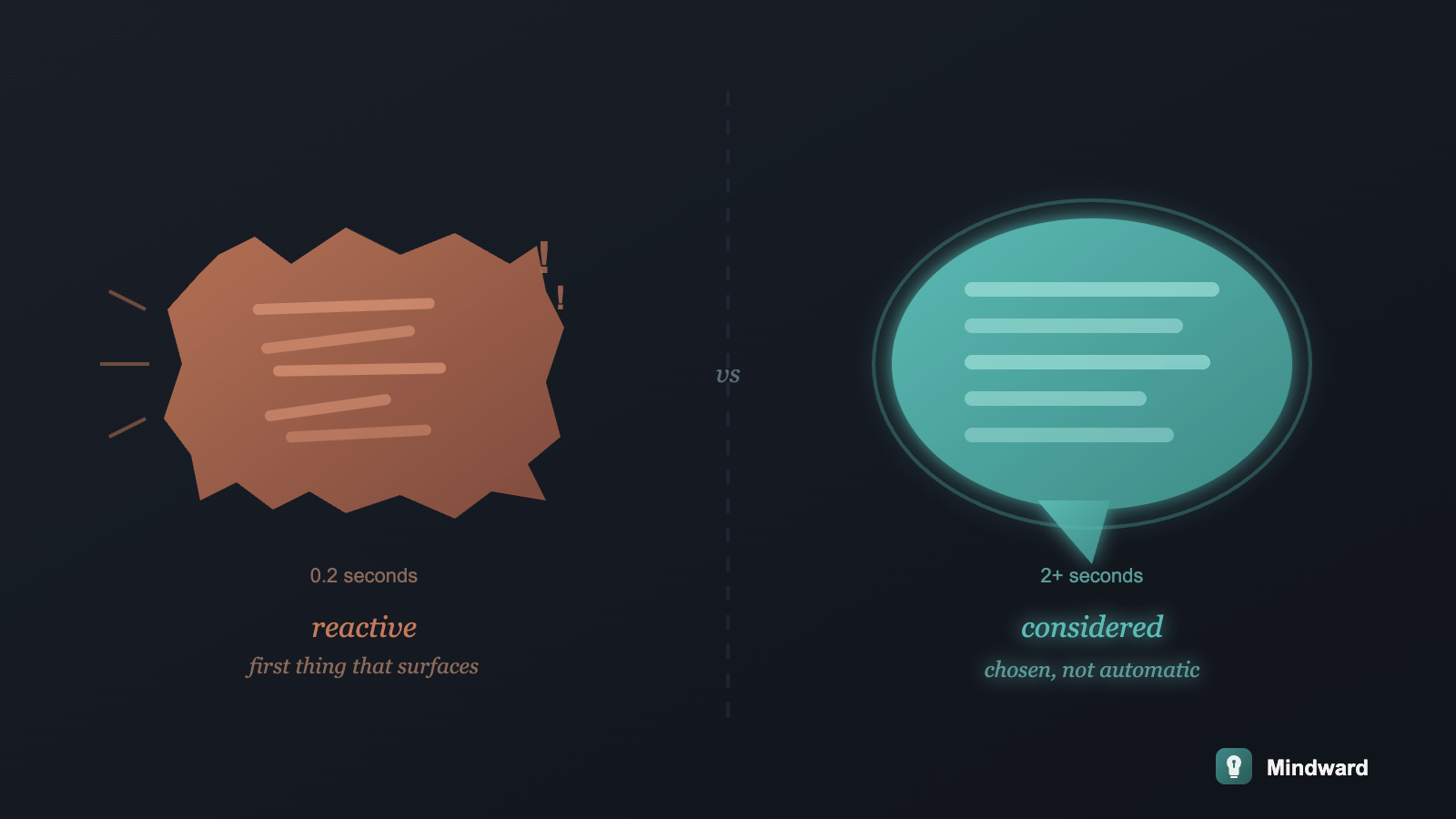
But speed and quality rarely align. The fastest response is almost never the best one. It's just the first thing that surfaced—often reactive, sometimes defensive, rarely considered.
What Happens in the Pause
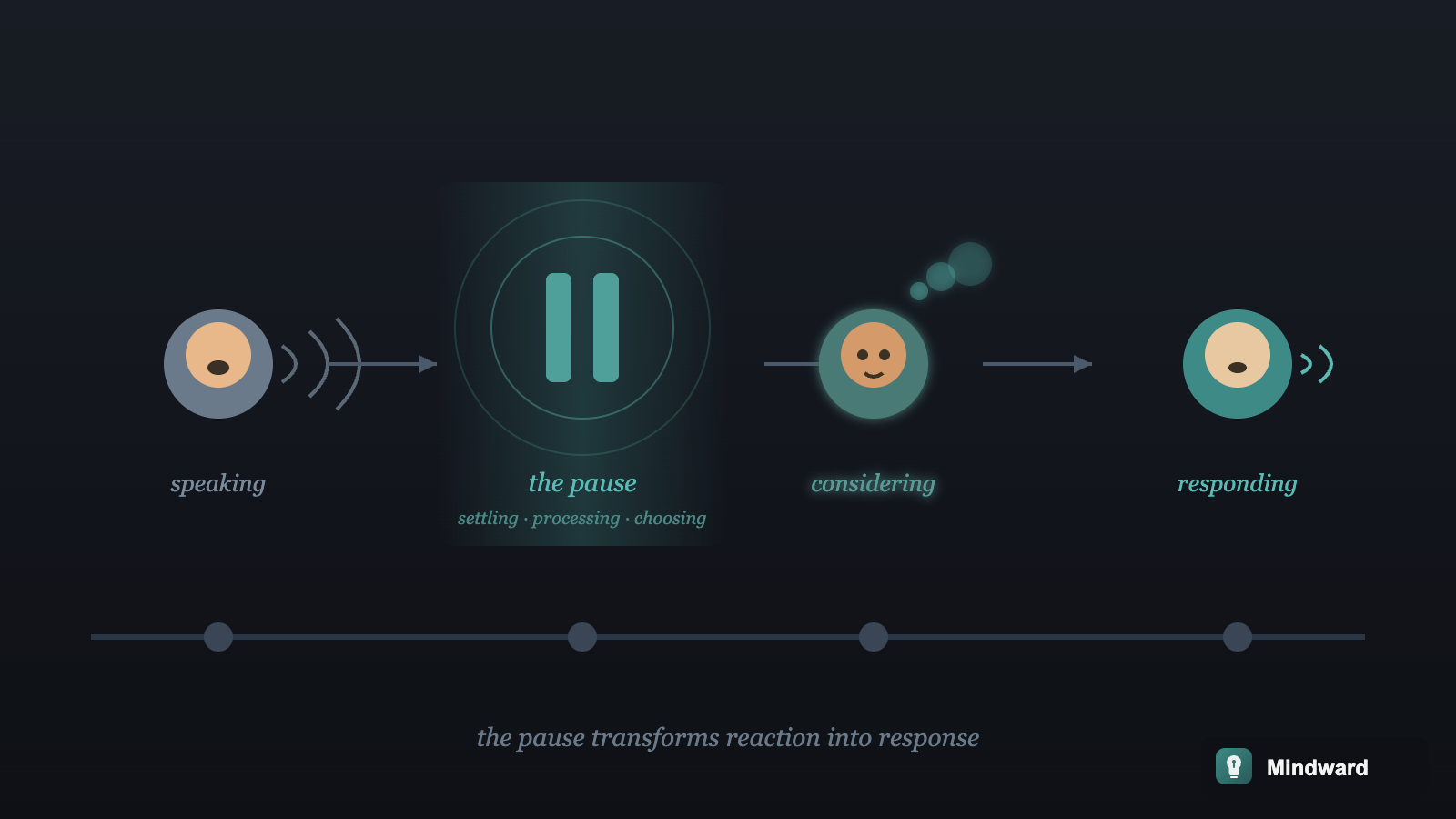
When you let a moment of silence exist before responding, several things happen simultaneously—most of them invisible, all of them valuable.
Your nervous system settles. If the conversation has any emotional charge, your first instinct is often defensive. The pause gives your reactive brain time to quiet and your thoughtful brain time to engage.
You process more fully. Meaning doesn't always arrive with the last word. Sometimes what someone said needs a moment to land—to reveal its layers, its subtext, what's underneath the surface.
You choose rather than react. Without the pause, you're at the mercy of whatever comes up first. With it, you can select from options. You move from automatic to intentional.
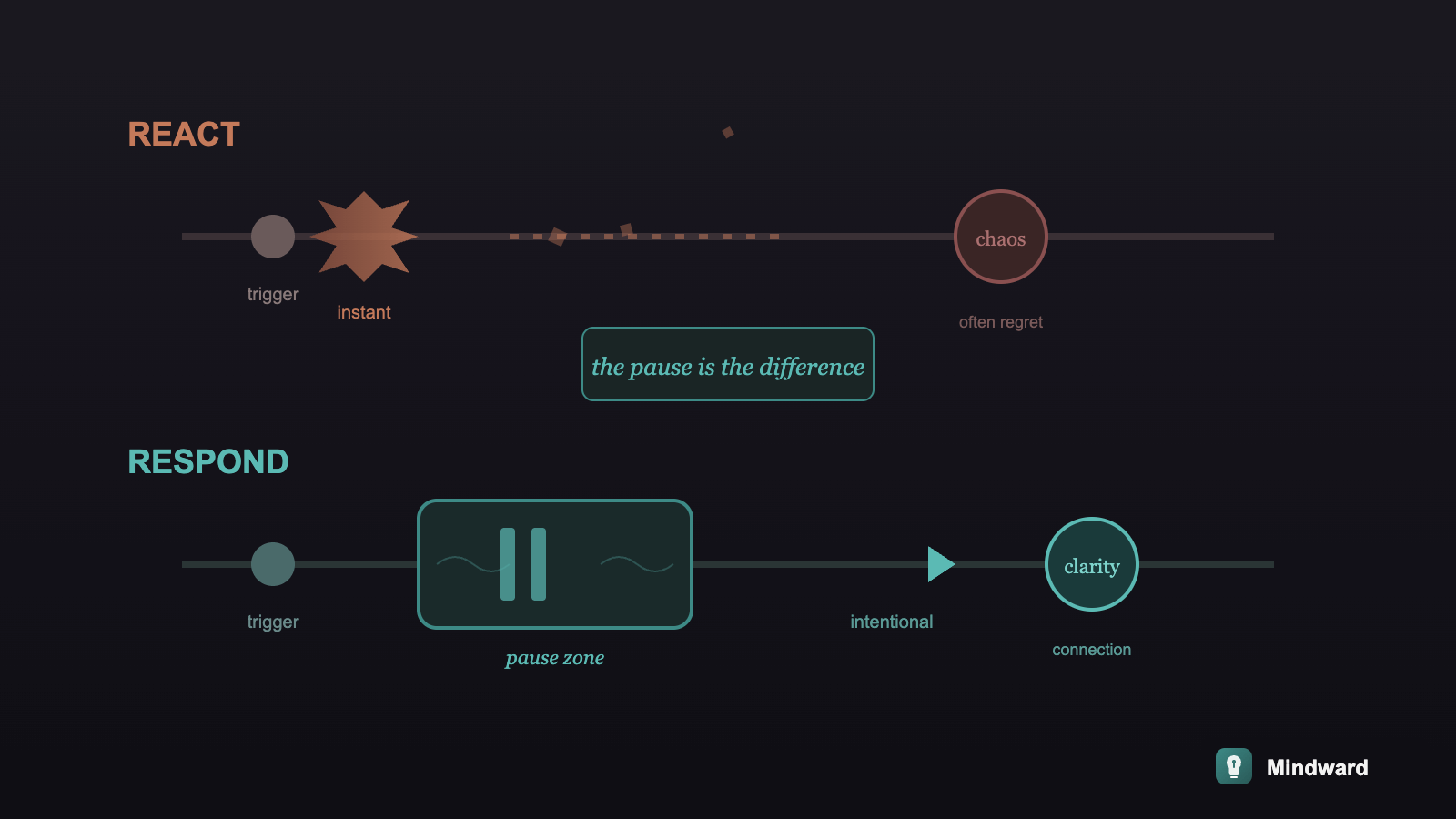
The pause is where you shift from reacting to responding. That distinction changes everything.
What the Other Person Experiences
Here's what most people don't realize: the pause isn't just for you. It transforms the experience for the person you're speaking with.
When you don't respond immediately, they feel heard. Your silence signals that what they said mattered enough to consider—not just volley back.
It also invites them to continue. Sometimes people aren't finished when they stop talking. They've paused to gather their thoughts, to find the courage for the next part. When you jump in, you cut that off. When you wait, you create space for what they haven't said yet.
And paradoxically, your slower response often carries more weight. Speed signals reflex. Pause signals thought. People listen differently to someone who clearly considered before speaking.
The Pause as a Pattern Interrupt
In tense conversations, the pause becomes even more critical. When emotions are high, the natural rhythm of conflict is rapid-fire—attack, defend, attack, defend. Each response escalates the last.
A deliberate pause breaks that pattern. It refuses to match the energy. It introduces friction into the escalation loop. And often, it de-escalates the other person too—because intensity needs matching intensity to sustain itself.
This isn't about being passive or withholding. It's about choosing not to let the pace of the conversation dictate the quality of your contribution.
How to Practice the Pause
If you're not used to pausing, it will feel awkward at first. The discomfort is real. But it fades with practice, and the payoff is immediate.
Start with low-stakes conversations. When a friend finishes a thought, count two beats before you respond. Notice what happens. Notice what you notice that you would have missed.
In harder conversations, name the pause internally. Tell yourself: I'm going to let this land before I respond. The intention helps you hold the space instead of filling it.
If the silence feels unbearable, you can bridge it without breaking it. A simple "Let me think about that" or even a nod buys you time while signaling engagement.
Silence as Respect
Ultimately, the pause is an act of respect—both for the other person and for yourself.
For them, it says: what you shared deserves consideration, not just reaction. For you, it says: I trust myself to respond thoughtfully, not just quickly.
The pause isn't hesitation. It's presence. It's the difference between hearing and listening, between reacting and responding.
You don't have to fill every silence. Sometimes the most valuable thing you can offer a conversation is the space to breathe.
The pause before you respond isn't doing nothing. It's doing the most important work of all.


Comments
How did you like this article?
No comments yet. Be the first to share your thoughts!